
When I was freelancing, I honestly thought that a small business and a startup were just different names for the same thing.
They both involved building something, taking a risk, and trying to earn income.
So what was really the difference?
The more I observed different people building different things, like some creating stable local services and others experimenting with apps and platforms, the clearer it became.
These are not the same paths.
They operate on different mindsets, different timelines, and very different definitions of success.
Choosing the wrong one for your personality and situation does not mean failure, but it does create unnecessary friction that slows you down.
In this post, I want to explain the 7 key differences clearly and practically, so you can make the right choice for where you actually are right now.
What Is a Small Business?
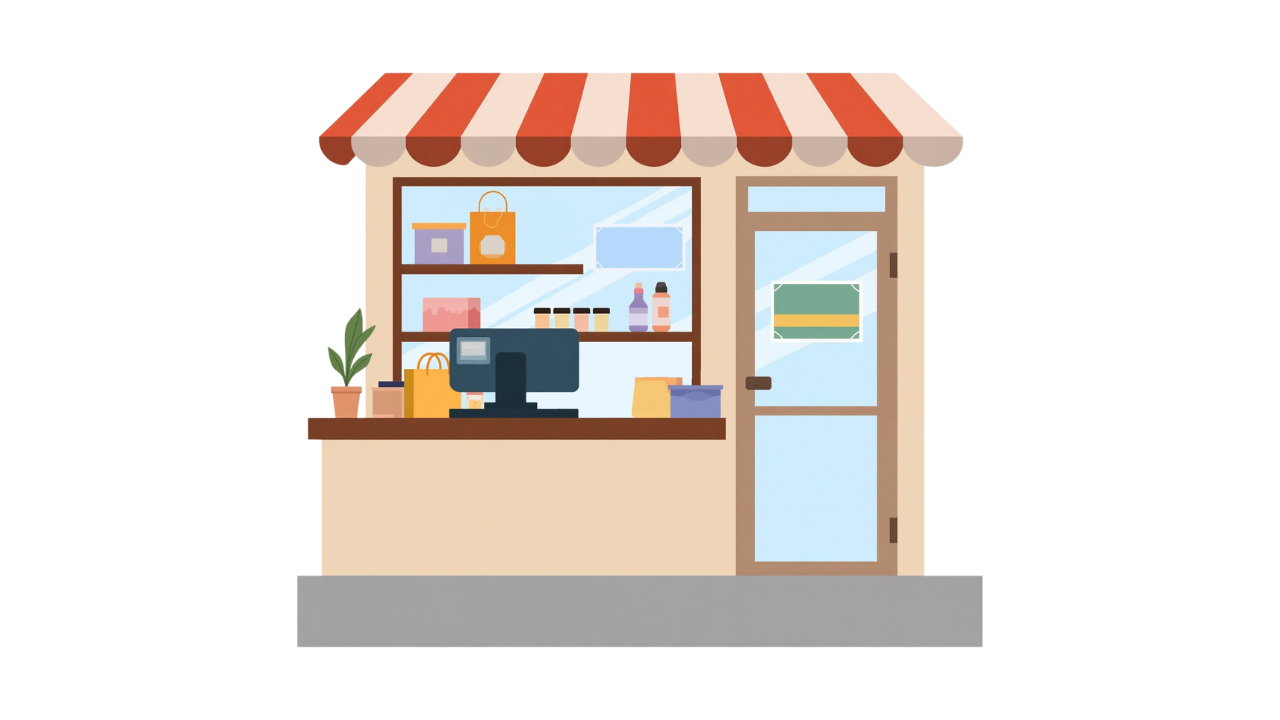
A small business is the most common and practical form of entrepreneurship, and it is exactly what it sounds like.
It is built with a clear and realistic goal: to create stable, consistent income that supports your daily life and gives you real financial independence.
Small businesses are not trying to disrupt an industry or scale to millions of users.
They focus on serving a specific group of people reliably and building something that works steadily over time.
When I think about small businesses, I think about real people around me who are building something meaningful in a practical, grounded way: the woman who runs a boutique in her neighborhood, the freelancer who earns a stable monthly income from her skills, and the home baker who has built a loyal local customer base.
Common examples include local retail shops, home-based food or baking businesses, freelance services like writing or design, small online stores, tutoring or coaching services, and digital service businesses like social media management.
The mindset behind a small business is fundamentally about control.
It is about keeping things manageable and building something that can actually last, not overwhelming yourself in pursuit of rapid growth.
The goal is steady income, financial stability, and the freedom that comes from running something entirely your own.
That kind of quiet, sustainable success is something many people underestimate, but in real life, it is a genuinely powerful foundation to build from.
What Is a Startup?
A startup is a very different kind of venture.
It is not simply a small business in its early stage; it is a fundamentally different approach to building something, with a different goal at its center.
A startup is built around an idea that is still being tested, shaped, and refined.
The core question a startup is trying to answer is not “How do I earn consistently?” but rather, “Can this idea work at a much larger scale?”
That shift in focus from stability to scalability changes everything about how decisions are made, how money is raised, and how success is measured.
Startups are typically designed to solve a problem in a new way, reach an audience that goes far beyond one location, and grow quickly if the idea proves itself in the market.
Think of how platforms like Airbnb, Coursera, or Uber began not as finished, stable businesses, but as early ideas that needed real-world testing.
Nothing was guaranteed.
Everything was being learned and adjusted in real conditions.
That experimental, high-potential-but-uncertain phase is exactly what defines a startup.
The mindset behind a startup is forward-looking and comfortable with ambiguity.
Instead of asking, “How do I make this stable today?”
Startup thinking involves asking yourself, “How big could this really be?” and “Can this solve a real problem better than what’s already out there?”
That orientation toward long-term scale, rather than near-term income, is what most clearly separates a startup from a small business.
Startups accept uncertainty as part of the process, and that acceptance is both their biggest risk and their biggest potential advantage.
READ MORE – How to Build a Personal Brand on LinkedIn (Step-by-Step Guide)
Small Business vs. Startup (A Quick Comparison For You)
Before diving into the 7 differences in detail, here is a simple side-by-side view of how these two paths compare across the most important dimensions:
Goal: Small businesses aim for stable income and long-term consistency. Startups aim for rapid growth and large-scale impact.
Funding: Small businesses typically use personal savings, small loans, or family support. Startups often seek investors, angel funding, or venture capital.
Risk: Small businesses prefer lower, manageable risk. Startups accept high risk as part of the growth process.
Timeline to profit: Small businesses aim to become profitable early. Startups may operate at a loss for extended periods while scaling.
Growth pace: Small businesses grow steadily and sustainably. Startups are designed to scale fast if the model works.
Team: Small businesses often start with one person or a small close-knit group. Startups build specialized teams quickly as they expand.
Measure of success: Small businesses measure success through consistent revenue and stability. Startups measure it through growth rate, user acquisition, and future valuation.
This comparison and standard are not about which is higher or lower; they are about which is a better fit for you.
Both are valid paths.
They just lead to very different journeys, and understanding the differences clearly is what makes choosing between them much easier.
Difference 1: Purpose and Vision
The most fundamental difference between a small business and a startup is the reason it was built in the first place.
This is not just a philosophical distinction; it shapes every decision that follows, from how money is spent to how success is defined.
Small businesses are built for stability, income, and long-term consistency.
The vision is grounded and practical: serve a specific group of people well, earn reliably, and grow at a pace that stays manageable.
There is nothing limiting about this goal.
In fact, for most people, building something stable and sustainable is exactly the right kind of ambition.
Startups are built for innovative and larger-scale results.
The goal is not just to earn, but to change or significantly improve the way something works.
A startup founder is not thinking about this month’s revenue; they are thinking about whether this idea can grow into something that reaches thousands or millions of people.
That bigger vision is exciting, but it also means accepting that stability may not come for a long time.
Think of it this way: a small bakery focuses on serving daily customers and building consistent income in its neighborhood.
A food delivery startup thinks about how it could connect restaurants with customers across an entire city, or eventually a country.
Both are solving a food-related problem, but the scale of the ambition and the path required to achieve it are completely different.
Difference 2: Funding Sources
How a business is funded tells you a lot about what kind of business it actually is, and small businesses and startups approach this very differently.
Small businesses typically rely on personal savings, small loans from a bank or microfinance institution, or support from family and the community.
The financial model is relatively simple: spend within your means, earn from customers, and grow from that revenue.
This approach keeps the business owner in full control and avoids the pressure and accountability that comes with outside investment.
Startups, on the other hand, often depend on external funding, angel investors, venture capital firms, or startup grants, especially in their early stages.
This is because startups frequently operate at a loss for extended periods while they focus on growth, user acquisition, and proving their model.
The logic is that if the idea scales correctly, future revenue will far exceed early losses.
That kind of bet requires external capital that most individuals cannot provide from personal savings alone.
This funding difference also reflects a difference in pressure and accountability.
A small business owner answers primarily to themselves.
A startup founder who has taken investor money answers to those investors, meets targets, and often has to demonstrate growth metrics on a regular basis.
Neither arrangement is superior; they simply reflect the different nature of what each type of business is trying to build.
Difference 3: Business Model
The way a business generates revenue is another area where small businesses and startups diverge significantly, and understanding this difference can help clarify which type of thinking fits your current situation.
Small businesses typically follow proven, straightforward models, selling products directly to customers, offering services for a flat fee, or running a subscription-based local offering.
The model is usually clear from the beginning, does not require significant experimentation, and produces revenue in a fairly predictable way.
A tutoring service charges per session.
A small online store sells products at a set price.
A freelancer charges by the hour or project.
Simple, direct, and reliable.
Startups often experiment with newer or more complex business models, freemium systems where basic access is free and premium features are paid, subscription platforms, marketplace models that connect buyers and sellers at scale, or technology-based systems where the product itself is the platform.
These models can take time to figure out, and many startups test several before finding one that works.
The trade-off is that when they do find the right model at scale, the revenue potential is often dramatically larger than what a traditional small business model can produce.
For someone just starting out, understanding which type of model you are trying to build helps you set realistic expectations for how quickly money will come in and how much patience the early stage will require.
Difference 4: Revenue Expectations
This is the area where many beginners get frustrated, because small businesses and startups are working toward very different financial timelines, and comparing them directly leads to confusion.
Small businesses aim for consistent monthly income and financial stability from a relatively early stage.
The goal is to reach profitability quickly and sustain the business from that earned revenue.
This does not mean immediate overnight success, but it does mean that within a few months of operating, a well-run small business should be moving toward covering its costs and generating real income for its owner.
Startups work on a fundamentally different financial timeline.
Many startups operate at a loss for months or even years while they focus on growth, product development, and market penetration.
The logic is that scale comes first, and profitability follows once the model is proven and the user base is large enough.
This is why startups seek outside investment because they cannot sustain themselves on early revenue alone while pursuing aggressive growth targets.
This difference matters enormously when you are setting your own expectations.
If you are building a small business and measuring success against startup growth stories you read about online, you will feel like you are failing when you are actually doing exactly the right things for your model.
If you are building a startup and expecting it to be profitable within the first few months, you may make decisions that prioritize short-term income over long-term growth in ways that limit the business later.
Knowing which timeline you are on is one of the most clarifying things you can do for your mindset and your strategy.
Pro Tip: If you are genuinely unsure whether you are building a small business or a startup, ask yourself this: Am I trying to earn stable income from a proven idea, or am I trying to test whether a new idea can grow at scale? Your honest answer to that one question will tell you more than any comparison chart.
Difference 5: Risk Level
Every business involves some level of risk, but small businesses and startups approach risk very differently, and your personal comfort with uncertainty is one of the most important factors in deciding which path fits you.
Small businesses are typically designed to minimize risk.
Decisions are made carefully, growth is incremental, and the priority is keeping the business stable and sustainable over the long term.
A small business owner is usually risking their own savings or a manageable loan, money they can account for and work to recover if things do not go as planned.
The risk is real, but it is contained and relatively predictable.
Startups inherently involve higher risk, and that risk is accepted as part of the process rather than avoided.
When you are testing a new idea in a market that has not yet confirmed whether it wants what you are offering, nothing is guaranteed.
Products change, target customers shift, models get overhauled.
Many startups fail not because the founders were not talented or hardworking, but because the idea did not find the right market fit, or the timing was off, or the competition was stronger than expected.
Startup founders understand this going in, and they accept it because they believe the potential upside of getting it right is worth the uncertainty.
The key question to ask yourself honestly is not which risk level sounds more impressive, but which one you can actually function well under.
Some people do their best work in structured, predictable environments.
Others thrive on experimentation and ambiguity.
Neither personality is wrong, but choosing a path that mismatches your natural relationship with risk is one of the most common and avoidable reasons people struggle unnecessarily in business.
Difference 6: Growth Speed and Scale
The pace and scale of growth are perhaps the most visible difference between small businesses and startups, and it is one that people often misread as a measure of quality rather than a reflection of intent.
Small businesses grow at a steady, controlled pace.
Growth is typically local or limited to a defined audience, and the goal is not rapid expansion but long-term consistency.
A small business that grows 20% year over year while maintaining quality and profitability is performing excellently by the standards of its model.
That kind of sustainable, manageable growth is exactly what a small business should be aiming for, and the owners who understand that are the ones who build something that genuinely lasts.
Startups are designed from the beginning for fast scaling, often across markets and geographies, if the core idea proves itself.
The whole premise is that if the model works, it should be possible to replicate it quickly and widely.
A startup that grows 20% per year would typically be considered underperforming; the expectation is growth that compounds dramatically as the model is validated and investment is deployed.
This difference is not a judgment about which kind of business is more valuable or more admirable.
A thriving small business that serves its community well and provides stable income for its owner is a genuine success by any honest measure.
A startup that scales rapidly and creates thousands of jobs is a different kind of success.
They are simply measuring different things, and both measurements are valid within their own context.
Difference 7: Team and Structure
How a business is organized and who runs it also differs significantly between small businesses and startups, and this difference becomes more pronounced as both types of businesses grow.
Small businesses often start with one person or a very small team, and many stay relatively lean even as they grow.
The structure is simple, roles are flexible, and everyone tends to be involved in multiple areas of the business.
The owner is usually close to every part of daily operations—serving customers, managing finances, handling marketing, and making decisions.
This closeness is a strength because it keeps the business personal and agile, and it often produces the kind of quality and consistency that builds genuine customer loyalty over time.
Startups also begin small, but they are structured with expansion in mind from the start.
As a startup grows, especially after raising funding, it typically builds out specialized teams quickly: product development, engineering, marketing, operations, and customer success.
Roles become more defined and distinct, decision-making processes become more formal, and the founder moves from doing everything to leading and directing.
That evolution from scrappy solo operation to structured organization is a natural and necessary part of the startup growth path.
For someone just starting out, the team structure question comes down to this:
Do you want to build something you run closely yourself, or do you want to build something that eventually operates beyond your direct daily involvement?
Both are legitimate goals, but they require different approaches to hiring, delegation, and how you think about your own role in the business from the beginning.
READ MORE – How to Start a Profitable T-Shirt Business from Home in 2026
Which One Is Right for You?
This is the question most people get stuck on, and the confusion usually comes from treating it as a question about which option is better, rather than which one actually fits.
After learning, observing, and reflecting on both paths, here is the truth I have come to understand clearly: there is no universally better option.
There is only what genuinely fits your mindset, your life situation, and the kind of work you can actually sustain over time.
A small business is likely the right fit if you value stability and control over fast, unpredictable growth.
If you want predictable income, lower risk, a manageable workload, and the satisfaction of building something steady and reliable, a small business gives you all of that.
It suits people who want to build something they can run with confidence, without the pressure of investor timelines or the uncertainty of an unproven model.
A small online service, a tutoring business, a home-based product line—these are not small ambitions.
They are grounded, meaningful, and entirely capable of producing real financial independence.
If you like to experiment, are comfortable with uncertainty, and are really excited about creating something at scale, then a startup is probably a good place for you.
If you find yourself thinking about how an idea could reach thousands of people, how a system could be replicated across cities, or how a platform could grow into something that does not depend on your direct involvement, that is startup thinking.
It requires a higher tolerance for risk, a longer time horizon before meaningful income, and the ability to keep working through ambiguity without losing momentum.
What I personally realized is that the most important factor in this choice is not the business model itself; it is what you can actually commit to consistently.
The best business structure in the world fails if you cannot sustain the mindset it requires.
Choose based on your real personality today, not on what sounds most impressive, because the right path is the one you will actually stay on, and staying on it long enough is what produces results in both cases.
READ MORE – 12 In-Demand Skills to Attract Business Opportunities You Can Start Today in 2026
Practical Tips Before You Decide
Whatever path you are leaning toward, there are a few things I wish someone had told me before I started, practical pieces of clarity that would have saved me a significant amount of confusion and second-guessing in the early months.
Start smaller than you think you’ll require. The greatest mistake that I see most beginners make is trying to launch too excessively large too quickly. They believe they need a perfect plan, a significant investment, and a fully formed product before they can begin. But in real life, almost every successful journey started very small—a basic service offered to one client, a simple idea tested with a small audience, or a single skill offered consistently until it built a reputation. A bad ambition is not to begin. It is smart risk management that gives you room to learn, adjust, and grow without breaking yourself financially or mentally in the process.
Invest in one skill before expanding. Whether you are building a small business or a startup, nothing moves without genuine skill behind it. The most common mistake I see is trying to learn everything at once — writing, design, marketing, sales, operations — and ending up with surface-level knowledge across all of them rather than real competence in any. Pick one skill that is directly relevant to what you are building and spend thirty days going deep on it. Writing, communication, content creation, marketing, design — whatever fits your direction. Real skill in one area opens far more doors than partial skill across five.
Know your honest relationship with risk. Before committing to either path, sit with this question genuinely: How do I actually feel about uncertainty? Not how you think you should feel — how you actually respond when things are unclear, results are slow, and there is no guarantee of what comes next. Some people are energized by that environment. Others find it genuinely destabilizing. Knowing your honest answer helps you choose a path that suits your psychology, not just your aspirations — and that alignment between mindset and model is one of the most underrated factors in whether a business survives its first year.
Begin with what you already have. You don’t have to have perfect timing, perfect tools, or perfect confidence to get started. Start with what you already know, what you already own, and where you already are. Progress does not begin with perfection but with action. It’s better to do a little bit every day over time than to wait for the perfect situation that never arrives.
The best time to start was earlier.
The second best moment is now.
READ MORE – How I Started My Affordable Web Design Business From Home
Frequently Asked Questions
What’s the main difference between a small business and a startup?
The core difference is in intent and scale.
A small business is built to create stable, consistent income from a proven idea, typically serving a defined local or niche audience.
A startup is built to test whether a new idea can grow rapidly at a much larger scale, often at the expense of early profitability.
That fundamental difference in what the business is trying to be feeds into the model, mindset, funding approach, and definition of success.
Can a small business become a startup?
Yes—though it requires a significant shift in mindset, strategy, and often funding.
A small business that discovers a scalable model, finds investor interest, or identifies a way to grow rapidly beyond its original scope can transition into startup territory.
However, this is less common than people assume, because the two models are built on different foundations.
Most small businesses that try to “become startups” without genuinely having a scalable idea end up overextended rather than accelerated.
Do startups always need investors?
Not always, but it is common, especially for startups that are scaling quickly and not yet profitable.
Some of the founders are bootstrapping their businesses, which means they grow using only their own income and assets.
This is slower but means the founder retains full ownership and control.
You need investors (or not) depending on how capital-intensive your model is and how fast you need to grow to capture the market opportunity you are targeting.
Which is better for a beginner — a small business or a startup?
For most people beginning their careers, a small business is the more practical starting point.
It allows you to learn the fundamentals of running a business, build real skills, and generate income without the pressure of investor timelines or the uncertainty of an unproven model.
Once you have that foundation real experience, real customers, and real understanding of how business works you are in a much stronger position to evaluate whether a startup model makes sense for your next idea.
Can one person run a startup alone?
In the very early stages, yes, many startups begin as solo operations, but as the startup grows and requires faster development, wider marketing, and more complex operations, a single person becomes a bottleneck.
Most successful startups eventually build a small founding team or bring in support, because the pace of growth that defines a startup is genuinely difficult to sustain alone.
A small business, by contrast, can remain a one-person operation indefinitely if that suits the owner’s goals.
Which is the right way? How do I know?
The most honest way to answer this is to look at what you are actually building, not what you wish you were building.
If you have a proven idea, a defined audience, and a goal of earning reliably, that is small business thinking.
If you have an untested idea you believe could scale significantly, are comfortable with uncertainty, and are willing to prioritize growth over near-term income, that is startup thinking.
Matching your path to your actual situation, rather than your aspirations, is what sets you up to succeed in whichever direction you choose.
READ MORE – 9 Challenges I Faced as a Businesswoman (My Journey)
Final Thoughts: Clarity Matters More Than the Label
After learning and observing both small businesses and startups, one important truth became very clear to me: success is not about choosing the path that sounds most impressive from the outside.
It is about choosing what you can realistically build, sustain, and stay committed to over time.
I used to feel confused seeing so many different paths being celebrated online: startups, passive income, freelancing, digital products, and scaling to millions.
It often felt like I was missing out if I did not choose the biggest, fastest, most ambitious option available, but over time, I realized something that genuinely changed my thinking: not every successful journey needs to be fast, viral, or dramatic.
Some of the most meaningful businesses are quiet ones.
They grow steadily.
They build stability before they build scale, and they last precisely because they were built to last, not just to impress.
The seven differences in this article are not a ranking.
They are on a map.
Use them to locate where you actually are and where you genuinely want to go, and then choose the path that matches both honestly.
Confusion leads to hesitation.
Clarity leads to action, and action, no matter how small, is what creates real results over time.
Have questions about choosing between a small business and a startup? Drop them in the comments below!
Thank you so much for reading! Share your opinions and perspectives in the comments below to increase the visibility of this article. Subscribe to She Speaks Business to get more stories like this one.
Best regards,
Fatima K.
Writer. Mother. Dream Builder. Founder.
