5 years ago, when I decided to start an online business from home, I had no roadmap.
I had ideas.
I had drive, and I had spent a lot of time reading about what was possible, but I had no clear picture of what actually starting would feel like.
What I did not expect was how much the experience itself would teach me.
Not just about business models or platforms or income strategies but about myself.
About consistency, patience, and what it really takes to keep going when nothing seems to be moving yet.
In this post, I want to share the 6 most honest lessons I learned in the process of starting and running my online business from home.
I hope at least one of them saves you time, frustration, or doubt.
Why I Decided to Start an Online Business From Home
When I look back at my decision to start in 2025, I realize it was not random or impulsive.
It came from a clear understanding that the world around me was changing, and I had two choices.
I could stay where I was and keep waiting for the right moment, or I could take a step and start learning something that had a real future.
I chose to start.
One of the first things that made online business feel possible for me was realizing it did not require a large investment upfront.
I did not have extra capital sitting around.
That used to feel like a reason I could not start, but once I understood how many digital business models work, that barrier disappeared.
You can actually start with what you have, try your ideas small, and learn from them and grow from there.
The reach also changed my thinking in a way I did not expect.
In a traditional setup, you are limited to your immediate area, your city, your network, and your physical surroundings.
Online, that limit disappears.
Your work can reach someone in a completely different country, which opens up a level of opportunity that simply was not available before.
And then there was flexibility.
Being able to work on my own schedule, from my own space, at a pace that fit my life and that mattered to me.
It still does.
It is not about avoiding hard work.
It’s about having actual control over when and how that work gets done.
What I understand now that I did not fully understand when I started is this: the goal was never to have everything figured out from day one.
The goal was to take the first step and let the learning happen through the doing.
That decision, made in 2025, is one I am still grateful for in 2026.
How I Started and the Business Models That Taught Me the Most
When I began, I did not launch one polished business with a complete strategy.
I explored. I tried different models, paid attention to what felt sustainable, and gradually found my direction.
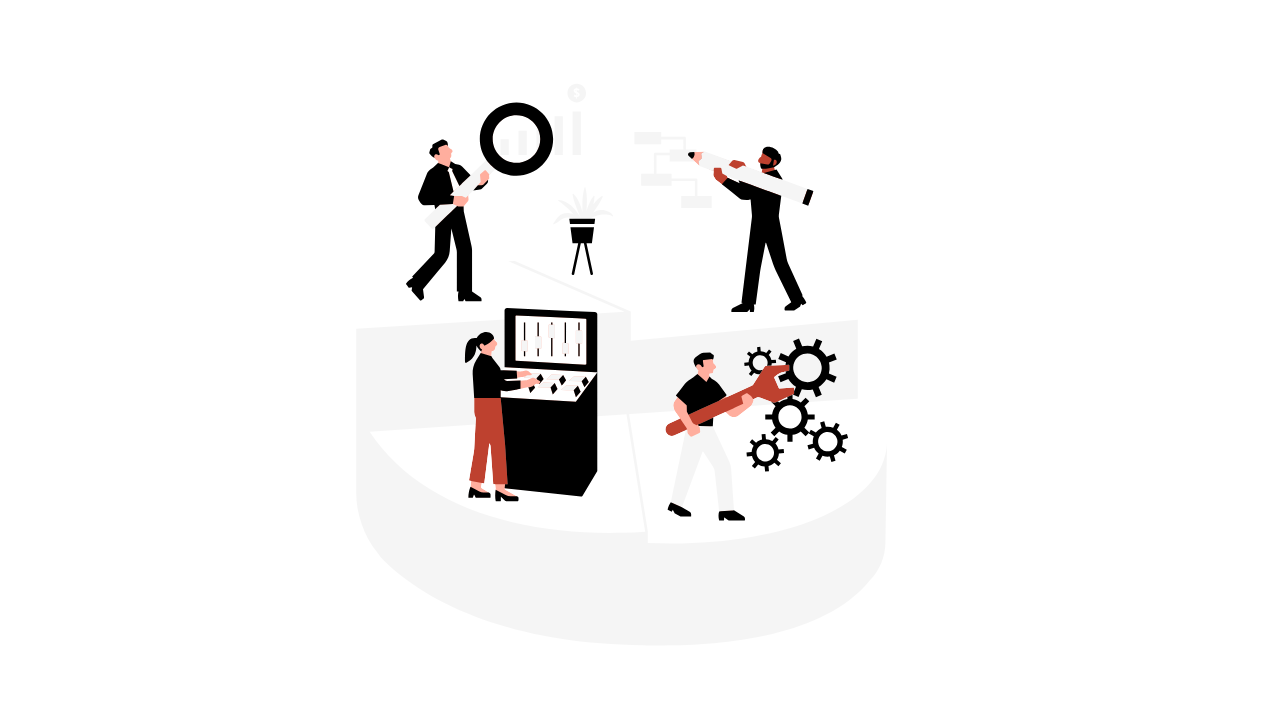
The models that shaped my early learning most were freelancing, content creation, print-on-demand, affiliate marketing, and dropshipping.
Each one taught me something different about customer relationships, about what value actually means, and about where my own strengths and weaknesses were.
None of them produced overnight results, but each one added something to how I think about business.
If you want a detailed breakdown of these business models and how to evaluate which one fits your situation, I covered that fully in a separate post: 7 Profitable Online Business Ideas for Women to Start From Home With No Experience.
That article will give you the complete picture without me repeating it all here.
What I want to focus on in this post is what none of those business model guides will tell you: the lessons that only come from actually being in it.
How I Built My First Digital Business: The 5 Steps That Actually Worked
Before I get to the lessons, I want to share the process that helped me move from confusion to actual direction.
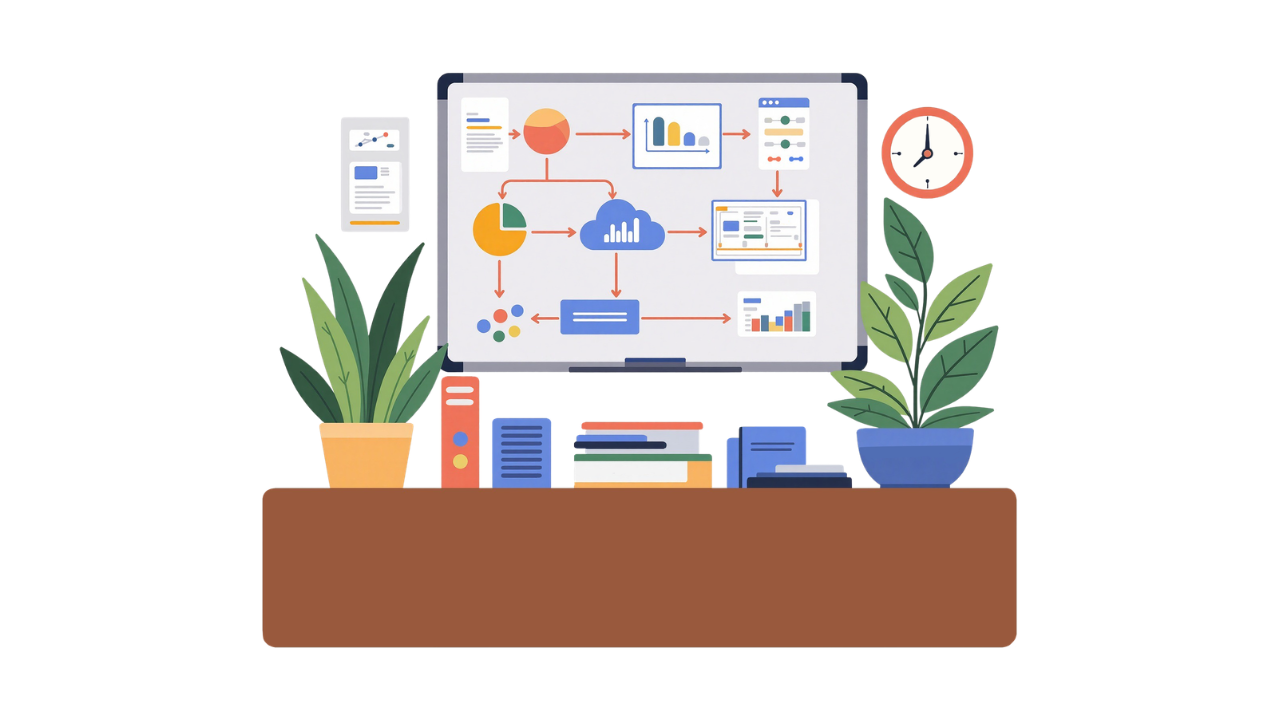
When I stripped everything back, building a digital business came down to five steps, not easy but clear.
The first was choosing a specific niche rather than trying to serve everyone.
In the beginning I made the mistake of being too broad, and it made everything harder.
The moment I focused on a specific audience and a specific problem, my content and products started making sense to both me and the people I was trying to reach.
The second was building a simple presence, a place where people could find me and understand what I do.
That started with this blog and a few social media profiles.
I didn’t wait until everything was just right.
I started with what I had and improved over time.
The third step was creating something genuinely valuable. Whether that was a blog post, a product, or a service, the goal was always the same: solve a real problem for a real person.
I learned quickly that when you focus on helping rather than just selling, people notice the difference.
The fourth was showing up consistently with marketing.
Creating something is only half the work.
The other half is getting it in front of the right people.
SEO, content marketing, and social media all went into that, not all at the same time but slowly as I learned what worked.
The fifth step was improving based on what the data and feedback actually showed me, not what I hoped was working.
This is the step most people skip, and it is one of the most powerful things you can do for any business.
Real growth comes from honest evaluation and consistent improvement, not from assuming things are fine when results tell you otherwise.
That process did not happen perfectly or quickly, but it gave me something to work with, and working with something imperfect is always better than waiting for something perfect that never comes.
Lesson 1: Starting Is Easy — Continuing Is the Real Challenge
I remember the energy of the beginning very clearly.
Everything felt exciting and new.
I was learning things every day, exploring ideas, and imagining what things could look like six months ahead.
The motivation felt almost automatic.
I did not have to push myself; I just wanted to keep going.
But that feeling does not last, and nobody really prepares you for the moment when it fades.
There came a point maybe six or eight weeks in where the novelty wore off and the results were not yet visible.
I had put in real effort.
I had published content, set things up, and made decisions, but nothing dramatic had happened.
No big numbers, no clear signs that it was working. Just the quiet in-between that every person building something online eventually has to sit with.
That is where most people stop.
Not because they decided to give in, but because there is nothing else to push them forward other than the initial enthusiasm that propelled them.
The starting line has energy built into it.
The middle stretch does not.
What helped me was shifting my understanding of what I was actually doing.
I stopped measuring success by whether results were showing yet and started measuring it by whether I was still learning, still showing up, or still improving something.
That shift was small in theory but significant in practice.
It changed continuation from a willpower problem into a values problem, and my values were much steadier than my motivation.
Starting is genuinely the easiest part of building an online business from home.
The real test is what you do on the days when nothing feels exciting, results feel far away, and you have to choose to continue anyway.
That choice, consistently made over time, really builds something.
Lesson 2: Consistency Matters More Than Motivation
This was the lesson I resisted most in the beginning because it sounded simple, almost too simple to be the real answer, but the longer I stayed in it, the more clearly I saw it play out in my own business and in the businesses of the people I observed and worked alongside.
Motivation is unreliable.
It comes and goes based on mood, results, energy, external circumstances, and a hundred other things you cannot always control.
If your business depends on motivation to function, it will only function some of the time, and some of the time is not enough to build anything real.
Consistency operates differently.
It does not need you to feel inspired or energized.
It just needs you to show up and do the work even when the work feels small, even when no one is watching, even when results seem distant.
That kind of quiet, repeated effort is what compounds over time into something visible and meaningful.
I had days when I published a blog post and it felt pointless.
Days when I sent an email and heard nothing back.
Days when I looked at my numbers and felt like nothing was moving.
On those days, the only thing that mattered was whether I showed up anyway, not perfectly, not brilliantly, just consistently.
What I eventually noticed was that the visible results always lagged behind the consistent effort.
Things I did months earlier were the things producing results today.
That lag used to frustrate me.
Now it is something I rely on.
If I stay consistent today, something I cannot fully see yet is being built.
That understanding makes consistency feel less like discipline and more like a form of trust, trust in a process that works even when you cannot watch it working.
Lesson 3: Skills Matter More Than Shortcuts
I spent time early on looking for faster ways to grow.
Tools that promised quick traffic. Strategies that claimed to shortcut the learning curve.
Formulas for results without the months of effort that results usually require.
Some of those things gave me short-term bursts.
None of them built anything lasting.
What I gradually understood is that the foundation of every sustainable online business is a real, developed, practiced skill.
Whether that is writing, design, marketing, communication, or customer understanding, the businesses that outlast trends and algorithm changes are the ones built by people who actually got good at something.
Skills take time to develop, and that is exactly why most people avoid building them in favor of shortcuts. But that same investment of time is also what makes the skills valuable.
If growing an online business from home were as easy as following a three-step formula, the opportunity would disappear the moment everyone followed it.
What keeps the opportunity open is that genuine skill development is slow and requires sustained effort, which means most people will not do it.
When I stopped looking for shortcuts and started investing seriously in getting better at writing, understanding SEO, and learning how to communicate value clearly, everything else got easier.
Not immediately, but consistently.
Skills compound in the same way that consistent effort does.
Each thing you get better at makes the next thing easier to learn, which makes the next business decision clearer, which makes the next result more predictable.
Pro Tip: When you are just starting out, pick one skill and go deep before going wide. Whether it is writing, design, or marketing, becoming genuinely good at one thing opens more doors than being average at five. Depth builds credibility, and credibility builds income.
Lesson 4: Results Take Longer Than You Expect and That Is Normal
This was honestly the hardest lesson for me to accept.
Not because I did not understand it intellectually; I had read enough to know that online businesses take time, but knowing something and experiencing it are very different things.
I expected progress to feel more visible, more measurable, more regular.
I thought if I were doing the right things, I would see steady, consistent evidence that they were working.
What actually happened was long stretches of quiet followed by unexpected moments of traction, and during those quiet stretches, it was very easy to wonder whether I was doing something wrong.
What I eventually learned is that the quiet stretches are not a sign of failure.
They are usually a sign that the work is happening underground, that trust is being built, that content is being indexed, and that an audience is forming slowly around consistent value.
None of that shows up in a dashboard right away, but it shows up eventually, and when it does, it tends to show up all at once in a way that finally makes the patience feel worth it.
The most practical thing I did during slow periods was stop checking metrics daily and start focusing on inputs instead of outputs.
I could not control when results would arrive, but I could control the quality of what I was putting out.
Shifting attention from the outcome to the effort made the waiting feel purposeful rather than frustrating, and it usually meant that when results did come, the foundation was strong enough to support them.
Growth in an online business from home is not a linear progression.
It is a slow curve that looks flat for a long time and then starts to bend.
The people who reach the bend are the ones who kept going when the curve still looked flat.
Lesson 5: You Learn More From Doing Than From Watching
I spent a significant amount of time in the beginning consuming information.
Tutorials, courses, blog posts, YouTube videos.
I read and watched more content about starting an online business from home than I could probably quantify, and I genuinely learned things from all of it, but there came a point where I realized I was using learning as a comfortable substitute for starting.
Watching someone explain a strategy is not the same as trying that strategy and discovering what happens when you apply it to your specific situation.
Reading about how to write a compelling headline is not the same as writing twenty headlines and discovering which ones actually get clicks.
Understanding the theory of SEO is not the same as publishing thirty articles and seeing firsthand what Google does with them over three months.
The gap between knowing and doing is where most beginners stay longer than necessary.
It feels safe to keep learning because learning does not carry the risk of failure.
Doing so, the discomfort of doing is exactly where understanding actually becomes real, where skills develop, where confidence builds, and where you discover things about your own strengths and preferences that no tutorial could have told you.
My biggest jumps in competence came immediately after my biggest mistakes.
When something I tried did not work, I understood exactly why in a way that reading about the same mistake never gave me.
That kind of earned knowledge is what makes decisions easier and faster over time.
You stop second-guessing so much because you have real evidence from your own experience to work from.
The information is useful but at some point, you have to put it down and start.
Not when you are ready, because ready rarely comes from preparation alone.
You become ready by doing.
Lesson 6: Focus Is the Difference Between Confusion and Progress
One of the most common patterns I see in people who have trouble building something online is not a lack of effort.
It is a lack of focus.
They are working hard, but they are working hard in too many directions at once, and the result is exhausted effort with no real momentum in any particular area.
I went through this myself.
Early on I was trying to write consistently for the blog, build a presence on three social platforms simultaneously, test a product idea, learn email marketing, and understand SEO all at the same time.
I was not doing any of those things badly.
I was just spreading my time and attention so thin that none of them had enough input to produce real output.
The shift that changed things was choosing one primary channel and one primary goal for a defined period of time and directing most of my energy there until I saw real traction.
Not forever, just long enough to build genuine momentum in one direction before expanding.
The results from that focused period were more significant than anything I had produced in the months before it, despite the fact that I was technically doing less.
Focus does not mean doing one thing and ignoring everything else forever.
It means understanding that deep, sustained effort in one direction builds faster than scattered effort across many directions.
Once one thing is working really working, not just existing, you have a foundation to build from, and building from a real foundation is how you scale without losing the progress you already made.
READ MORE – How to Start a Profitable T-Shirt Business from Home in 2026
Frequently Asked Questions
What is the most profitable online business to start from home? This depends on your skills, available time, and how much you can invest upfront. Freelancing is often the fastest path to income because you are selling a skill you already have. Content-based businesses like blogs and affiliate marketing take longer to build but create more passive income over time. Digital products and dropshipping sit somewhere in between. The most profitable model for you is the one that fits your current situation and that you can sustain long enough to see real results.
Do I need a large budget to start an online business from home? No — and this is one of the most important things to understand before you start. Many online business models, including freelancing, content creation, and print-on-demand, can be started with very little upfront cost. What you do need to invest is time, consistency, and the willingness to keep learning. Budget becomes more relevant when you want to scale, not necessarily when you want to start.
How long does it take to make money with an online business? Freelancing can generate income within weeks if you have a marketable skill and reach the right clients. Content-based businesses typically take three to six months before meaningful traffic and income begin to appear. Product-based businesses depend heavily on your marketing strategy and how quickly you build an audience. The honest answer is that it varies — but for almost every model, the first three months are primarily about learning and building rather than earning.
Can I start an online business from home with no experience? Yes, and most people who are successfully running online businesses today started with no direct experience in business. What matters more than experience is the willingness to learn, adapt, and stay consistent long enough for the learning to compound into real skill. With free courses, communities, and content online, experience is no longer a barrier to entry. Consistency and honesty about what is and is not working are far more important.
What is the biggest mistake beginners make when starting an online business? The most common and costly mistake is expecting results too quickly and quitting before the work has had time to compound. Close behind that is trying to do too many things at once without building genuine depth in any one area. Both mistakes come from the same root: treating an online business like a shortcut rather than like a real business that requires patience, skill development, and sustained effort.
How do I stay consistent when I am not seeing results yet? The most useful thing I found was focusing on inputs rather than outcomes during slow periods. You cannot always control when results arrive, but you can control the quality and consistency of what you put out. It also helps to track progress in ways that are not tied only to revenue — things like content published, skills improved, connections made, or feedback received. These smaller markers of progress keep the work feeling meaningful during the stretches when the numbers have not caught up yet.
READ MORE – 12 In-Demand Skills to Attract Business Opportunities You Can Start Today in 2026
Final Thoughts: What Starting an Online Business From Home Really Teaches You
Looking back, the most valuable things I gained from starting an online business from home were not the income or the platform or the audience, as meaningful as those things are.
They were the lessons that came from the experience of building something real under real conditions.
I learned what consistency actually feels like when results are not yet visible.
I learned that skills are worth more than shortcuts, that patience is not passive but active, and that focus is not a limitation but a multiplier.
I learned that every mistake I made in public was a lesson I carried privately into every decision that followed.
If you are at the beginning of this journey, I want you to know that the confusion you feel right now is not a sign that this is not for you.
It is a sign that you are at the starting point of a learning curve that gets steadily more navigable the longer you stay on it.
Start where you are.
Use what you have.
Stay consistent long enough for the work to compound and trust that the lessons you are about to learn, including the hard ones, are exactly what will make you better at this than you can currently imagine.
Found this helpful? Have questions? Drop them in the comments below!
Thank you so much for reading! Share your opinions and perspectives in the comments below to increase the visibility of this article. Subscribe to She Speaks Business to get more stories like this one.
Best regards,
Fatima K.
Writer. Mother. Dream Builder. Founder.